The vinyl versus wood argument gets emotional in a way that other building material debates do not, and that is worth naming up front. Wood people think vinyl looks cheap. Vinyl people think wood is a permanent chore. Both have a point, and neither is wrong, which means the honest answer depends entirely on your house and how you want to spend your weekends. What does not depend on preference is how each one behaves in this climate, where walls go through repeated freeze and thaw cycles, take wind driven rain, and then bake through humid summers. Here is the comparison without the sales angle, including the part that matters more than either material, which is what sits behind the panels.
Cost Up Front, and Why That Gap Is Real
Vinyl costs less to buy and less to install, and the installation difference is bigger than people expect. Vinyl goes up faster, needs no finishing, and does not require a painter afterward. Wood costs more for the material, takes longer to install, and then needs paint or stain before it is actually finished, which is a second trade and a second invoice. For a whole house, that gap is not a rounding error. This is the single biggest reason vinyl dominates in most neighborhoods around here. Whether the gap is worth closing depends on what you are getting for it, which is mostly appearance and, on the right house, resale value.
Maintenance Is Where the Argument Is Won or Lost
Vinyl needs washing. That is essentially the whole maintenance program. Rinse it, deal with mildew on shaded walls, and otherwise leave it alone for decades. Wood needs painting or staining on a schedule, and the schedule is not optional. Miss it by a few years and water gets into the wood, and once wood siding starts rotting you are into replacement rather than refinishing. Around here, with the shade and moisture on north facing walls, that schedule comes around faster than people expect. If you enjoy the work or you are hiring it out and have budgeted for it, fine. If you are hoping to skip a cycle, wood will punish that.
How Each Handles Freeze and Thaw
Vinyl expands and contracts with temperature, which is why it is installed with room to move and why panels are never nailed tight. Done correctly this is a non issue. Done incorrectly, you get buckling and waviness, which is an installation failure rather than a material failure. Vinyl does get brittle in deep cold, so a hard impact in January can crack a panel that would have survived in July. Wood is dimensionally more stable through temperature swings but far more sensitive to moisture, and freeze and thaw drives water into any unsealed edge, then expands it. That is how paint fails from behind, which is the thing that surprises people.
What Matters More Than Either Material
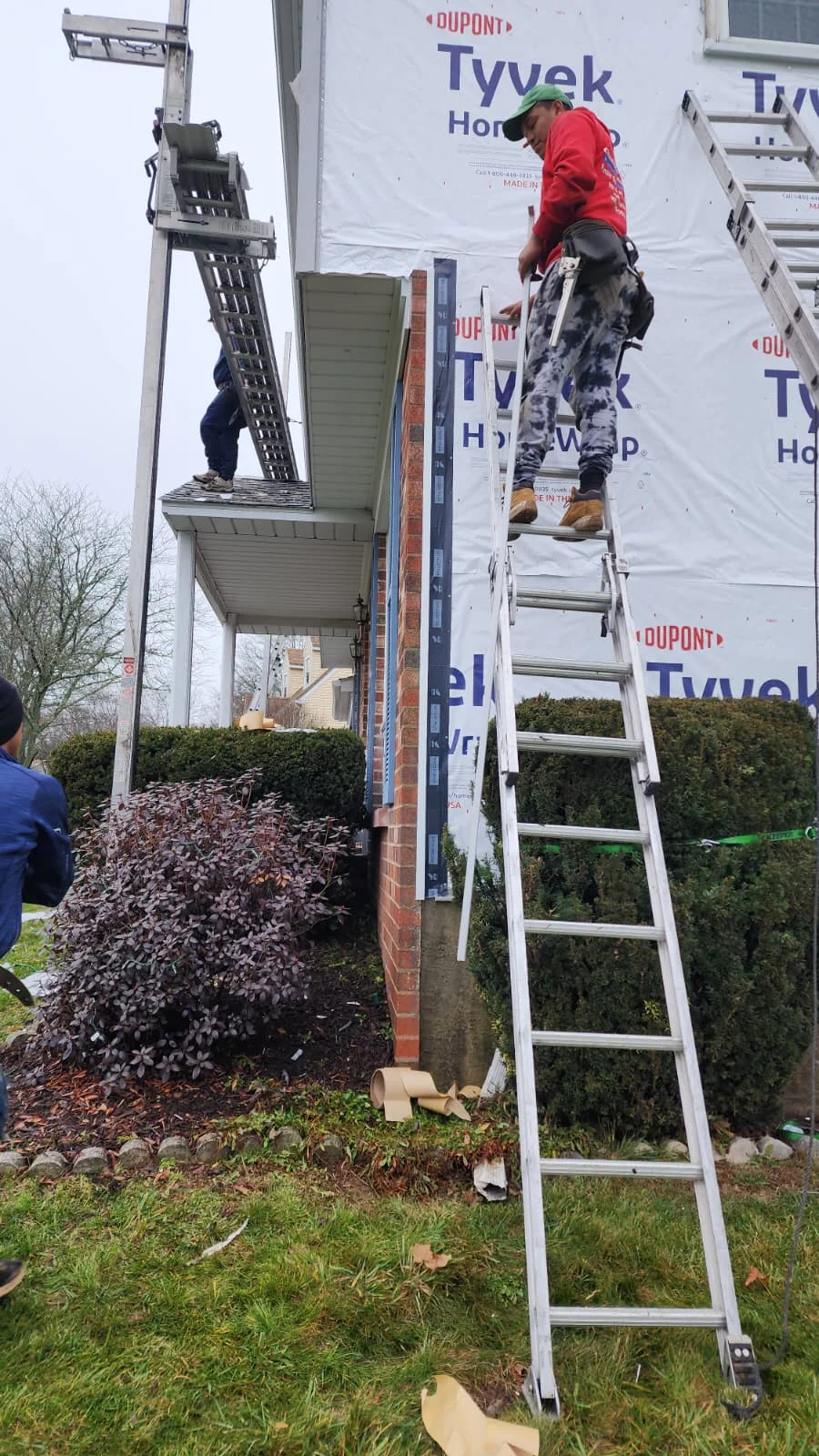
Here is the part that gets skipped in every vinyl versus wood conversation. What sits behind the siding determines whether the wall survives, and it does not care which material you chose. House wrap and a proper moisture barrier, correct flashing at windows and doors, sealed trim and corners, and sound sheathing underneath. Beautiful wood siding over rotted sheathing fails. Perfect vinyl over a wall with no moisture barrier traps water and fails. If a siding quote does not mention what is happening behind the panels, that is the question to ask before you ask about the panels themselves. Rot gets cut out and replaced, never covered over.